BIOGRAPHICAL NOTES
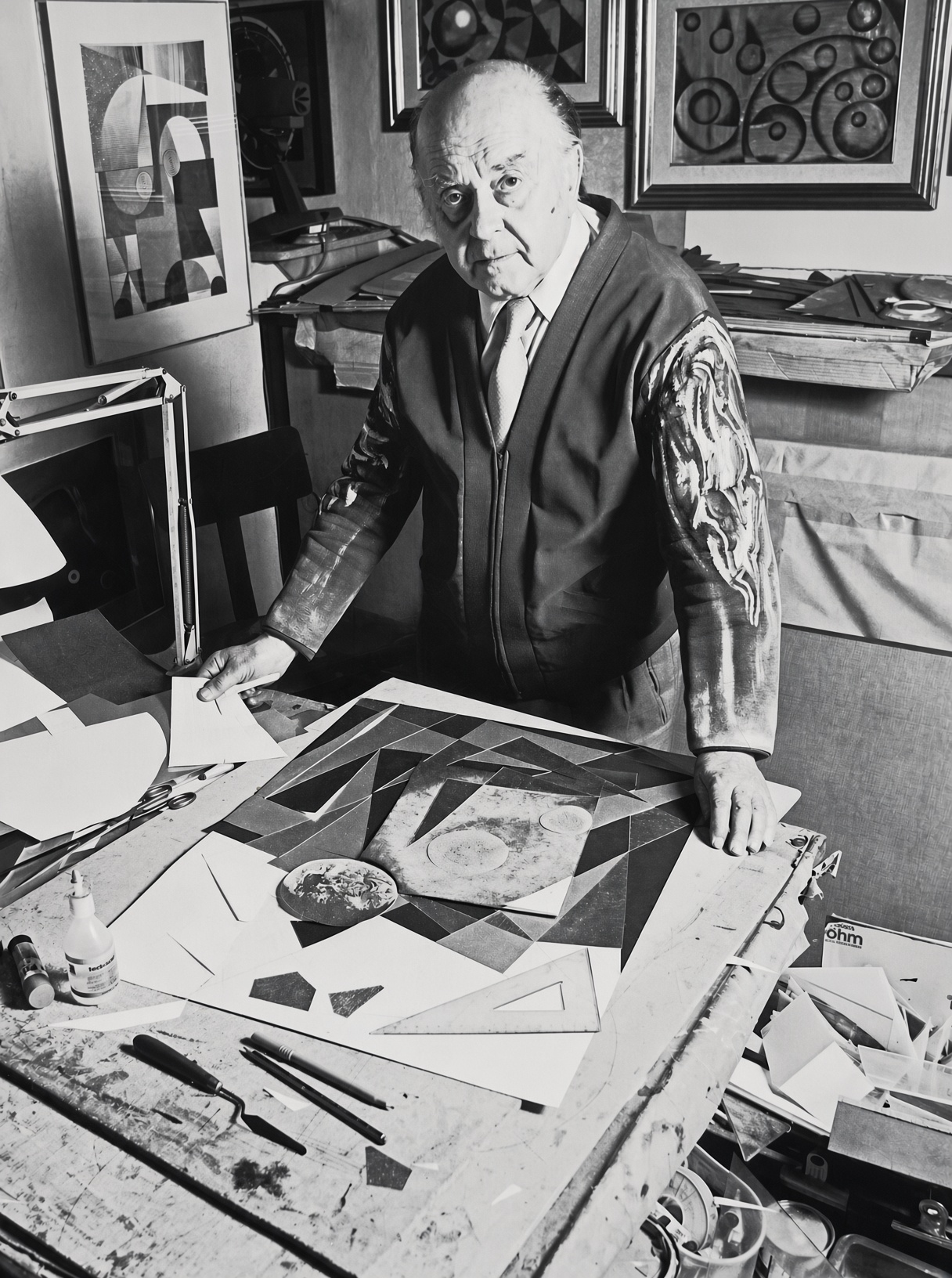
Nikolay Slavov Diulgheroff was born on 20 December 1901 in Kyustendil and died on 9 June 1982 in Turin, Italy.
Origins and family background
He was born into the family of printer Slavi Dyulgerov and Tena Ceclareff. In 1890, his father and his uncle Nikola G. Dyulgerov founded the town’s first printing house, “Saedinenie” (“Union”). Slavi later became its sole owner and developed it into a publishing house producing educational, children’s, sporting and liturgical literature. The family was progressive for its time and had three sons, of whom Nikolay was the youngest.
According to his baptismal certificate, his baptismal name was Nikola. Later, after moving abroad, he began signing his name as Nikolay / Nicolay / Nicola Diulgheroff.
From an early age, he worked in his father’s printing house alongside his brothers. During the First World War, when his father was mobilised, Nikolay took on part of the work. There he acquired practical skills in typography, typesetting, layout and printing, his first substantial encounter with graphic design and visual culture.
He showed a strong interest in drawing from childhood. At the age of 14 (1915), he participated in a group exhibition in Kyustendil. At 16, he designed a family house. He also took part in an exhibition in 1918. These early works are now considered lost.
Education and formative years (1920-1925)
In 1920, with the support of his two older brothers and knowing that he would not inherit the printing house, he left for Vienna.
He enrolled at the Kunstgewerbeschule (School of Applied Arts), where he studied until the end of 1921. He participated in the annual exhibitions of the “Friends of Art” (Kunstfreunde).
In 1922, he continued his studies in Dresden at Hans Haffenrichter’s private Neue Schule für Kunst und Grafik “der Weg” (“The Way”, New School of Art and Graphic Design). There he held his first solo exhibitions and participated in an exhibition in Berlin.
In 1924, he organised a solo exhibition in Sofia, at a gallery at 16 Aksakov Street. He then returned briefly to Kyustendil, worked again in his father’s printing house and sought opportunities as an architect.
Turin and the Futurist period
In November 1926, he moved permanently to Turin with his wife Lyuba Gabrovska, whom he knew through family connections and had married in Bulgaria. He enrolled at the Higher School of Architecture of the Accademia Albertina and graduated with honours in 1932. He later obtained Italian citizenship. He remained in Turin for the rest of his life and was named an honorary citizen of the city.
Even before his arrival, he had corresponded with Filippo Tommaso Marinetti. In Turin, he established contact with Luigi Colombo, known as Fillia, the leader of the Turin Futurist group, and soon joined the second wave of Futurism. From 1927, he began exhibiting regularly with the group.
Diulgheroff brought his Central European Constructivist background to Italian Futurism. He combined the geometric rigour and functionality of the Bauhaus with Futurism’s dynamism, machine aesthetics and cult of speed. He created a distinctive hybrid style, clear and structured yet full of energy.
Principal areas of work
- Painting and collage: abstract and semi-abstract compositions, often featuring intersecting planes of colour.
- Graphic design and posters: advertising campaigns for Cinzano, Campari and Amaro Cora.
- Interior and furniture design: furniture, lamps, ceramics and crystal objects.
- Architecture: Casa Mazzotti in Albisola (1934), the Cora pavilion at the Bari Fair (1935), numerous interiors and, later, discotheques and clubs.
- Collaboration with Fillia: together they designed the interior of the Futurist tavern Taverna Santopalato. Diulgheroff proposed the dish pollofiat, included in the “Manifesto of Futurist Cuisine” (1930).
He participated in more than 40 exhibitions, including the Venice Biennale (from 1928 to 1942), and exhibitions in Milan, Paris, Leipzig, Barcelona, Moscow and elsewhere. He contributed to the magazines “La Città Futurista”, “La Città Nuova” and “Stile Futurista”.
Later years and family
After the Second World War, he continued to work actively. From the mid-1960s, his son Romano Diulgheroff joined his studio. Together they designed numerous entertainment venues, including discotheques, clubs and hotels (Sporting Club Santhià, Pick Up in Turin, Il Patio, Hotel Alexandra and others).
In the 1960s, he received gold medals: the City of Turin award (1967), the City of Florence award (1967) and a medal from the Polytechnic University of Turin (1968).
Death and legacy
He died on 9 June 1982 in Turin, aged 80.
His works are held in the Uffizi Gallery in Florence, the Galleria Nazionale d’Arte Moderna in Rome, collections in Turin, the Vladimir Dimitrov–The Master Art Gallery in Kyustendil and numerous private collections. The family archive in Turin preserves a substantial part of his legacy.
In Italy, he is recognised as an important figure in the second wave of Futurism. In Bulgaria, he remained almost unknown for a long time, although interest in him has grown in recent decades. In 2023, a commemorative plaque was unveiled in his honour in Turin.
Nicolay Diulgheroff remains a striking example of a Bulgarian artist who successfully became part of Europe’s most radical avant-garde movements and created an original synthesis of Bauhaus Constructivism and the dynamism of Italian Futurism.